
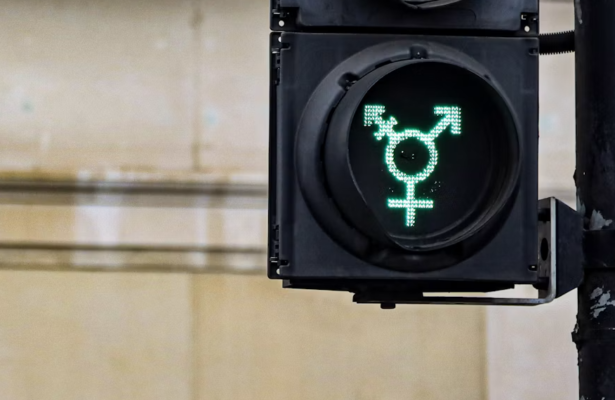
 Everyone should be able to work without being mocked, excluded or treated unfairly. For transgender employees, however, everyday working life can involve anxiety about potential colleagues’ reactions, intrusive questions or worrying whether being open about their identity could affect their career.
Line managers, HR professionals and business leaders help shape these experiences – and that’s why we’ve written this article which also supports Trans Awareness Week, November 13-19.
Understanding the challenges, challenging inappropriate behaviour and offering practical support can create a workplace where trans people feel respected and able to contribute.
What does transgender mean?
Transgender, often shortened to trans, describes someone whose gender identity differs from their sex registered at birth. A trans woman was registered male at birth; a trans man was registered female. Some non-binary people – who do not identify exclusively as a man or woman – also describe themselves as trans.
Being transgender does not depend on having surgery. Some people seek medical treatment; others do not. Transition may involve social changes, such as using a different name, alongside or without medical changes. Describing everyone who has not had surgery as “pre-operative” therefore assumes a destination they may never choose.
Gender identity is also separate from sexual orientation: knowing someone is transgender tells you nothing about whom they are attracted to. Acas confirms that protection under the Equality Act’s gender reassignment provisions does not require surgery, medical treatment or a Gender Recognition Certificate.
Transgender numbers in the UK
Precise details are vague but the 2021 Census offers some useful indication. In the 2021 Census, approximately 262,000 people aged 16 and over in England and Wales – around 0.5% – reported a gender identity different from their sex registered at birth. These estimates are now classified as “official statistics in development”, reflecting uncertainty about the data, including how respondents understood the question. They cover neither the whole UK nor specifically people in work.
Regardless of the numbers, any responsible employer will strive to be aware of the challenges faced by their transgender workforce and those wishing to join who are transgender. What’s more, they will want to help overcome them – and comply with the law.
What does employment law require?
In England, Scotland and Wales, the Equality Act 2010 protects people with the characteristic of gender reassignment against direct and indirect discrimination, harassment and victimisation. Protection can begin when someone proposes to transition. Northern Ireland has separate protection through its sex discrimination legislation.
The Supreme Court’s April 2025 judgment clarified that sex in the Equality Act means biological sex. It expressly confirmed that transgender people retain protection against discrimination. Employers should obtain current advice when reviewing single-sex facilities, alongside safeguarding everyone’s dignity.
Understanding the workplace challenges
Problems for trans people within the workplace can range from recruitment bias and restricted career opportunities to gossip, exclusion and ridicule disguised as banter. Repeatedly using a former name or deliberately using incorrect pronouns can also become a means of humiliation.
CIPD inclusion research published in 2021 found that 55% of trans workers surveyed had experienced workplace conflict during the previous year; at least half of those conflicts remained unresolved. This measures conflict, rather than exclusively transgender discrimination, but highlights the importance of effective management and safe reporting routes.
A five-point plan for employers
We’ve put together some suggested actions towards a more supportive workplace for trans people.
- Build understanding through practical training.
We start with education – that’s explaining terminology, common misconceptions and acceptable workplace behaviour. Use realistic examples: intrusive questions about surgery, jokes in a team chat or excluding someone from customer-facing work. Give managers the confidence to intervene, without expecting a trans colleague to educate everyone. - Challenge bullying and make reporting safe.
Set clear expectations covering offices, remote working and social events. Address ridicule promptly, including behaviour dismissed as harmless banter. Provide a reporting route outside the employee’s immediate manager, investigate fairly and check that anyone raising concerns experiences no retaliation. Harassment can be unlawful even where causing offence was not the intention. - Agree support with the individual.
Have a private conversation about what would help. If someone transitions at work, agree any changes to names, email addresses, passes and communications. Ask who may be told, what may be shared and when. Avoid questions about their body or treatment unless genuinely necessary for an agreed workplace arrangement. Acas recommends agreeing the timing of administrative changes with the employee. - Review policies and everyday arrangements.
Check recruitment, promotion, dress codes, records and absence procedures for unnecessary barriers. Plan sensitively for appointments and recovery: the Equality Act specifically protects against certain less favourable treatment of gender reassignment-related absence. Review facilities against current law, considering practical options such as additional self-contained toilets. - Make inclusion part of everyday leadership.
Model respectful language, correct mistakes briefly and listen without defensiveness. Respect lawful differences of belief while addressing conduct that humiliates or harasses colleagues. Use confidential feedback to understand whether staff feel safe speaking up and assess whether recruitment and development decisions are fair.
Trans Awareness Week
Employers may wish to support awareness of Trans Awareness Week, November 13-19. It is one of the many UK awareness days that bring people together around a shared cause. This week promotes understanding and inclusion to help build communities where everyone is treated with dignity and respect. It aims to send a positive message to trans and gender-diverse people who may be experiencing discrimination, isolation and barriers to support. There is no one organisation behind Trans Awareness Week, but a summary can be found on the Includability website here.
Final thoughts
Trans awareness becomes meaningful through everyday decisions: how managers respond to a joke, handle a confidential conversation or assess someone for promotion is the real measure of how committed they are to creating a truly inclusive culture. Employers who combine clear standards, informed policies and individual support can reduce unnecessary barriers and ensure that all trans people should have a fair opportunity to work, develop and be treated with dignity.
Photo by Kamsin Kaneko on Unsplash
