
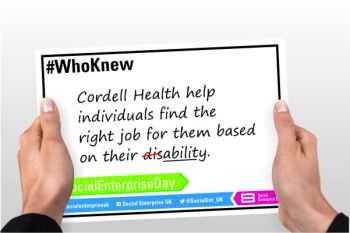
 #whoknew that disabled people can work too? Sounds shocking, doesn’t it? Of course, they can. Yet according to Gov.uk, less than half disabled people who would like to work are not in employment.
Despite often applying for jobs they’re overqualified for, a disabled person can expect to get a stream of rejections day after day. Employers are sitting with their hands tied behind their backs in fear of getting it wrong, worried about how much it’ll cost, believing that it’ll mean someone is always off sick. It’s easier just to not go there at all. Yet, disabled people make up one of the most loyal and committed workforces out there and it’s time employers opened their eyes and made a change. This untapped resource has a huge role to play and with little more than a desire to change, British business can make a difference today.
Disability awareness training
We know about inequality in the workplace due to sexism and racism, and society has come a long way in enabling us to be able to openly talk about it. Disability is the difference that we don’t yet know how to address. Line managers and human resources are the gatekeepers – get them trained in disability awareness so they have the confidence to make this change and share it with the company. Everyone has a part to play. #whoknew is a social enterprise offering support through educating employers and helping employers and individuals make adjustments. Or try the Disability Confident scheme.
Shout about it
Most disabled people are put off jobs before they’ve even applied. Shout about the diversity in your workplace by making sure your disability policy is in clear site on your website and that the applications process is accessible for all.
Interview the person
Interviewing a disabled person shouldn’t be any different to interviewing anyone else. Don’t talk about the difference. Talk about their ability, the job, the responsibilities, how they would envisage themselves fulfilling the role. See past the label and interview the person. If the person thinks they would need some workplace alterations in order to enable them to do the job this can be organised at a later date.
Call in the Support
There are loads of places you can go to get support if a disabled person is right for the job. Gov.uk offers advice and funding at no cost to the employer. A lot of the time changes needn’t cost anything and can be as simple as offering flexible working hours to miss rush hour on public transport or enabling them to work from home.
Add Value
A diverse workforce is stronger and more creative, the more elements of society it represents, the more views and resources it has to draw on and the better the business’ competitive edge. Not only that, but disabled people are more likely to be engaged and loyal than other employees. After all the best view often comes from the hardest climb.
Do you have diversity in your workplace? It would be great to hear about your experiences of how your colleagues have overcome adversity to fulfil a workplace role.
